Canto IX Literary Map of Exeter & Devon connection: Dartmoor; Arthur Conan Doyle, Sylvia Plath, Ted Hughes
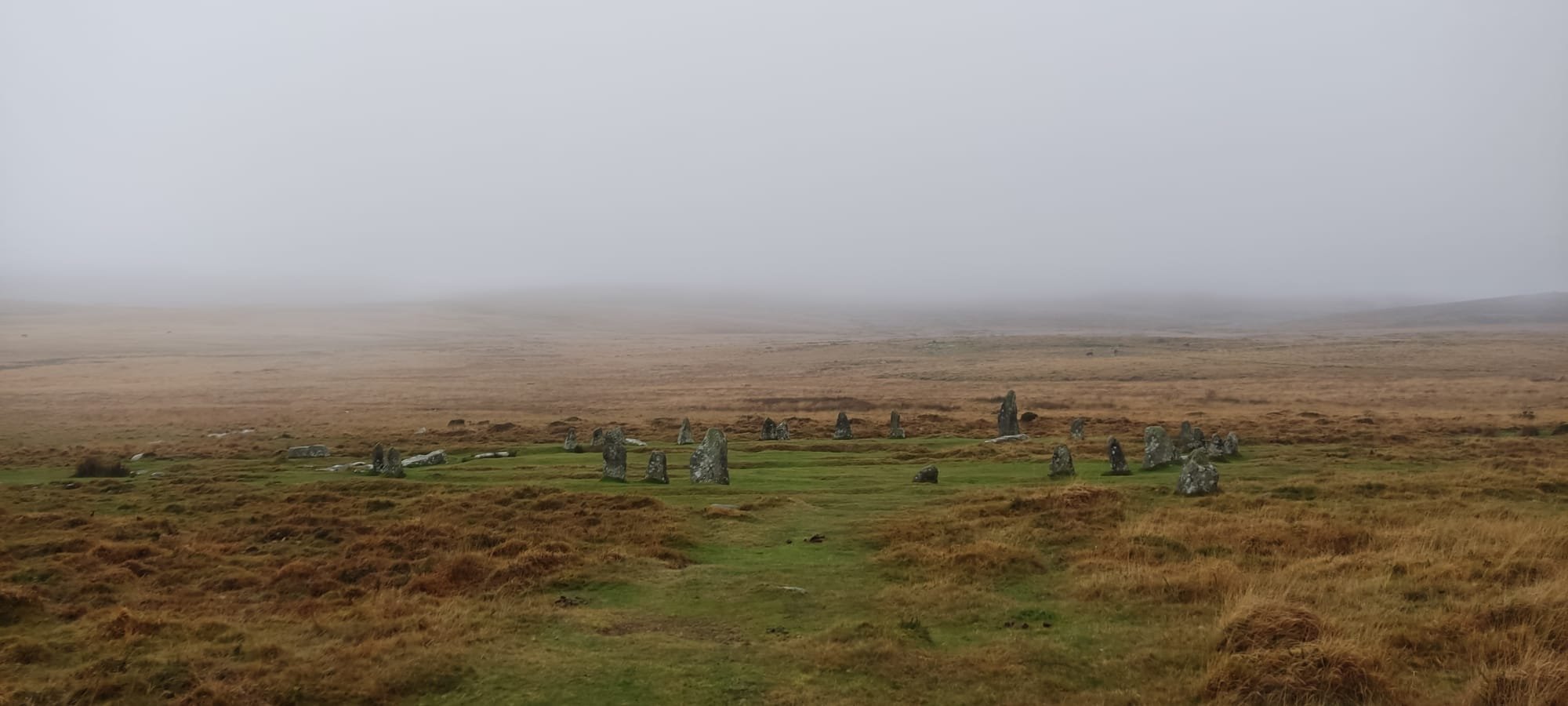
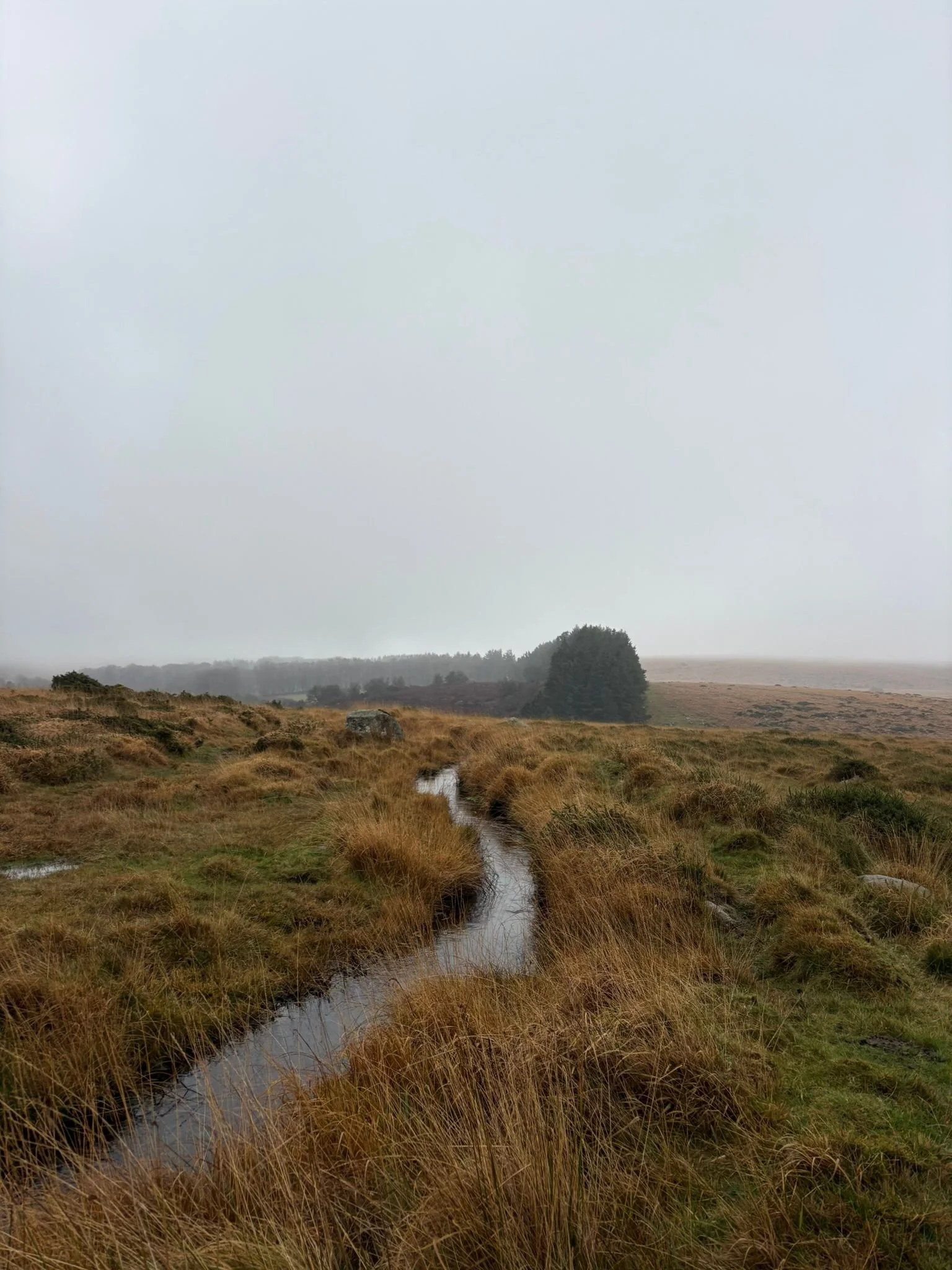
Canto IX – Dartmoor
“Once thou hast heard on hillside’s slope
The melancholy cuckoo calling in the wood.
Thereafter, do not thou be stayed from journeying,
Hindered in thy going, by any living man.
Seek the deep…”
- The Husband’s Message
If the sea is the primal mouth –
yawning desire and chewing mountains
into glass – then the moor
is the creature’s stomach; vast
and swelling and folding over
and over and over.
This hare’s belly is quietly alive –
it lingers and slopes with the weight
of gorsy bacteria; the stones have roots;
the moss has eyes; the dirt deals in
memories. Here is directed,
in gastral omniscience, the nightmares
and evil and sin. Here, shadows flock
to die; burnt up every morning
in clots of crimson and blue.
Empty, yet teeming –
the transmuting of death into life
is just one more instance of digestion
in a divine system intent on boiling
demons into dragons – freedom offered
for the price of wings.
You taste it
in the tendons of the tensing soil
and the contractions of a broken birch.
If you are alone and stewing
in that balmy, draggled light –
beware –
you are already swallowed
and to resist
is never worth the fight.
Hark the clamour of hounds and horns
jettisoned by spit-flecked spectral
lips – billowing bloody murder
on Devon’s moors; all creatures
no matter their ilk or size tremble
when the hooves of the Wild Hunt rip
and wreck the bracken – the only creatures
whoever dared to snarl and snap
the heels of the hares in their orbit.
Old Crockhern himself, knock-kneed
with the weight of Wistwood witchcraft
could not placate Cabell’s hounds –
those bawling shrieking blemishes,
who’d fang the Devil’s honeyed fingers
and gore the Sun for the taste
of a single cosmic tear.
That was what brought the physician –
those rattling gut wails forcing boulders
to shake beneath their moss –
yet still, Doyle came,
dressed and pomped
and stinking like London;
he slumped into Fox Tor Mire
and pressed a stethoscope to the peat
and listened to its rotting heartbeat.
He knew that no incantation would quell
what the Devil himself could not restrain
and sought instead a different spell
and found salvation in the human brain –
Holmes! The sound alone breaks fantasy
and makes circles of poor paradox;
those baying shades with burning jowls
could not out-talk that lucid fox
and fled debate and reason both and
stopped and stalled in sin and growth;
no longer do they bite or prowl
yet, if you tarry and cock an ear
you might just catch their final howl.
Perhaps you’ll hear the hum-hiss
of armoured bees, drudging honey
and droning poison in Plath’s ear –
bumping fuzzy lances against
the bell jar with all the rhythm
of a Roman mob; the moor was not fond
of Americans, but made exceptions
for a pithy tongue whip-cracking fascists
and digging small heels in the sides of lions –
that magician’s ally,
that woman from the foam –
resurrected at dawn
to char the distant tors
and bring them into clarity.
Lent lilies prostrated
and clamped green hands to gilt mouths
afraid those spun-sugar fingers
would twist their trumpets
and croon chaos in the cavity;
this moor could not decipher why
it sensed her glass-wrapped steps
like ruddy thunder on a wire
and why – once those footfalls
ceased, the sound was louder still –
never before or since could that giggling,
riotous mass of land remember
a louder silence.
Egg,
then gunk
then foot – branched
and burst from calcium –
that trident noose clawing
for oxygen, that pink afterbirth
beating naked wings;
there and forever
was Crow. Cawing forth
the pinion stubble – that black
rainbow, those quills of kings
dragging, dipping, devouring;
it roamed and sought the
earth quivers, where coiling worm
counted loam and bang! Stilettoed,
dissected, ripped into Exodus –
Crow cut patches of that coral flesh
and gobbled and feasted and
paused – knowing once more
it was under the eye of another –
the man was following Crow again.
Beatle-browed and pinching verse,
crouched and quiet and watching –
always watching –
thumbs orbiting the blackened nib
to paint nature’s calamities;
Crow resolved to return the favour
and skated clouds and half-heartedly
sniped the squealing wisps, never removing
its onyx glims from the man’s long coat –
he often strayed and bent to stroke
the floral cilia, but would start and flip his shoulder
and steel his eyes
and hawk Crow with hanging glares
and force the bird to descend and strut
like a puppet on a string –
jerking the motions
in primitive mummery –
and he would laugh and laugh
and laugh again and walk away
and that troubled avian would
skew its face and puzzle
why he was never shocked
by the interests of a puny god.
The man left and returned,
grizzled and palled and scooping
dirt with crocodile hands
and Crow approached once more
and saw him digging in cow bellies
and hooded, fleeing the rain cuffs,
chasing bleats and fearing horses.
One day, when Crow could feel
the gum in its eye and the slack
in its plumes, it circled and dropped
and that raking foot once more mauled
the air and Crow knew it was dying
and when a vast shadow split the sun,
the bird raised its gaze to spit in the Devil’s eye
but instead once more met the man
stooped and studying;
am I dead? Asked Crow
no – said the man – and Crow believed him
and died and Hughes gathered that soot bundle
and buried it in a cairn by the river Teign
and never laughed
at another bird again.
It is difficult to find circles
In a jagged land – but carve the rowan
and drink the rings and know
the hares are happiest darting
over marram grass on tufted wings –
those crystal strands, pale and pure,
a white-gold crown
upon the moor.
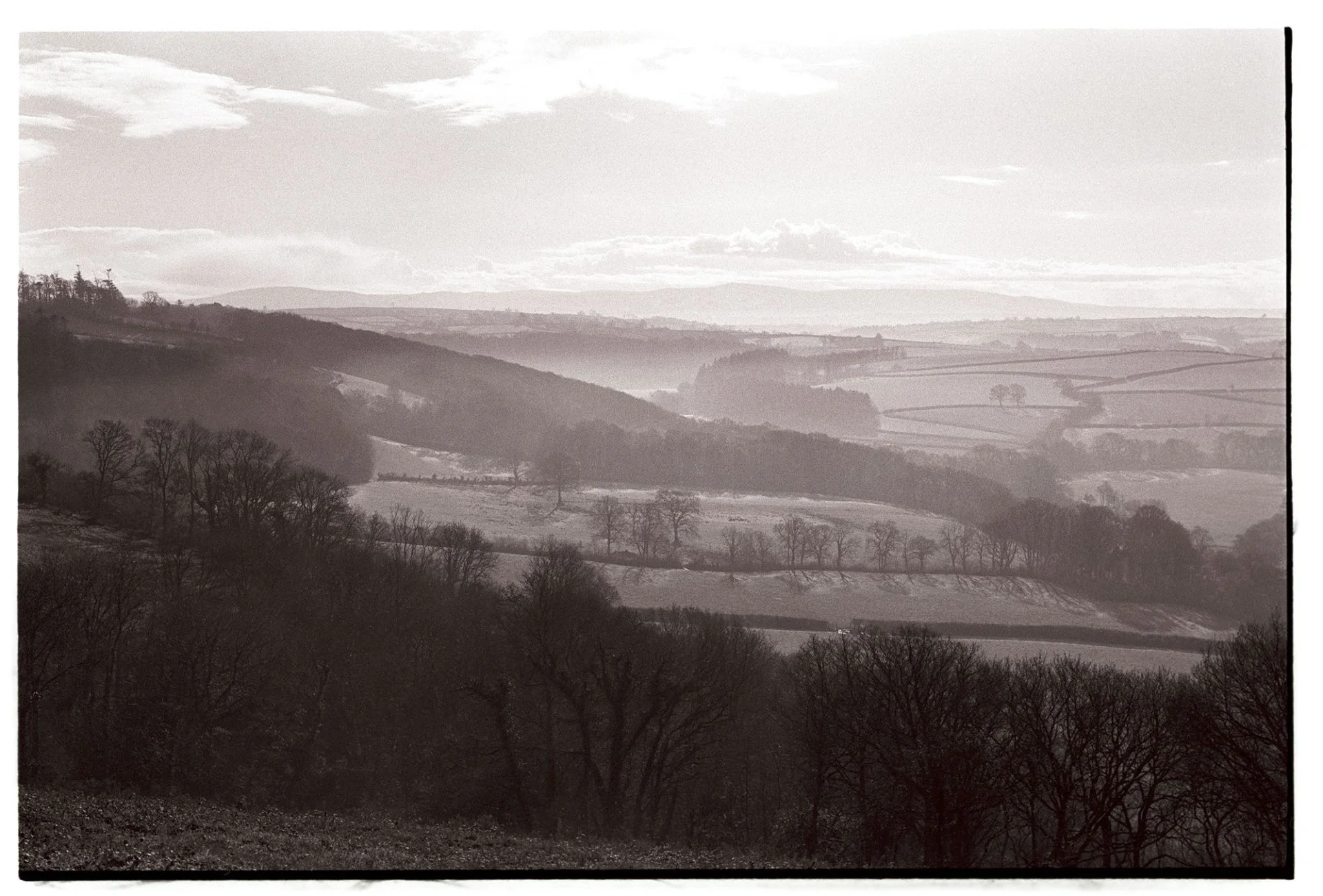
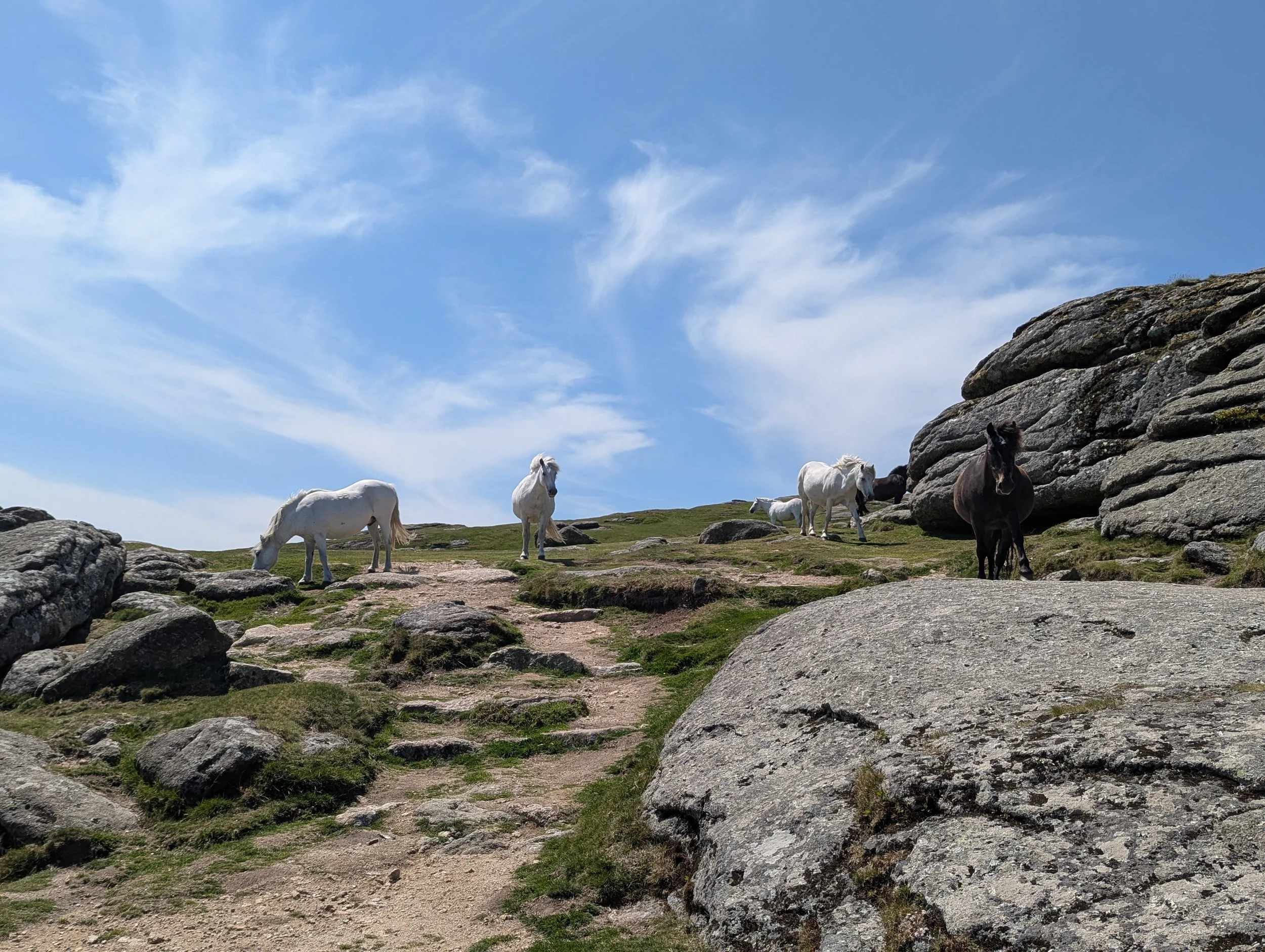
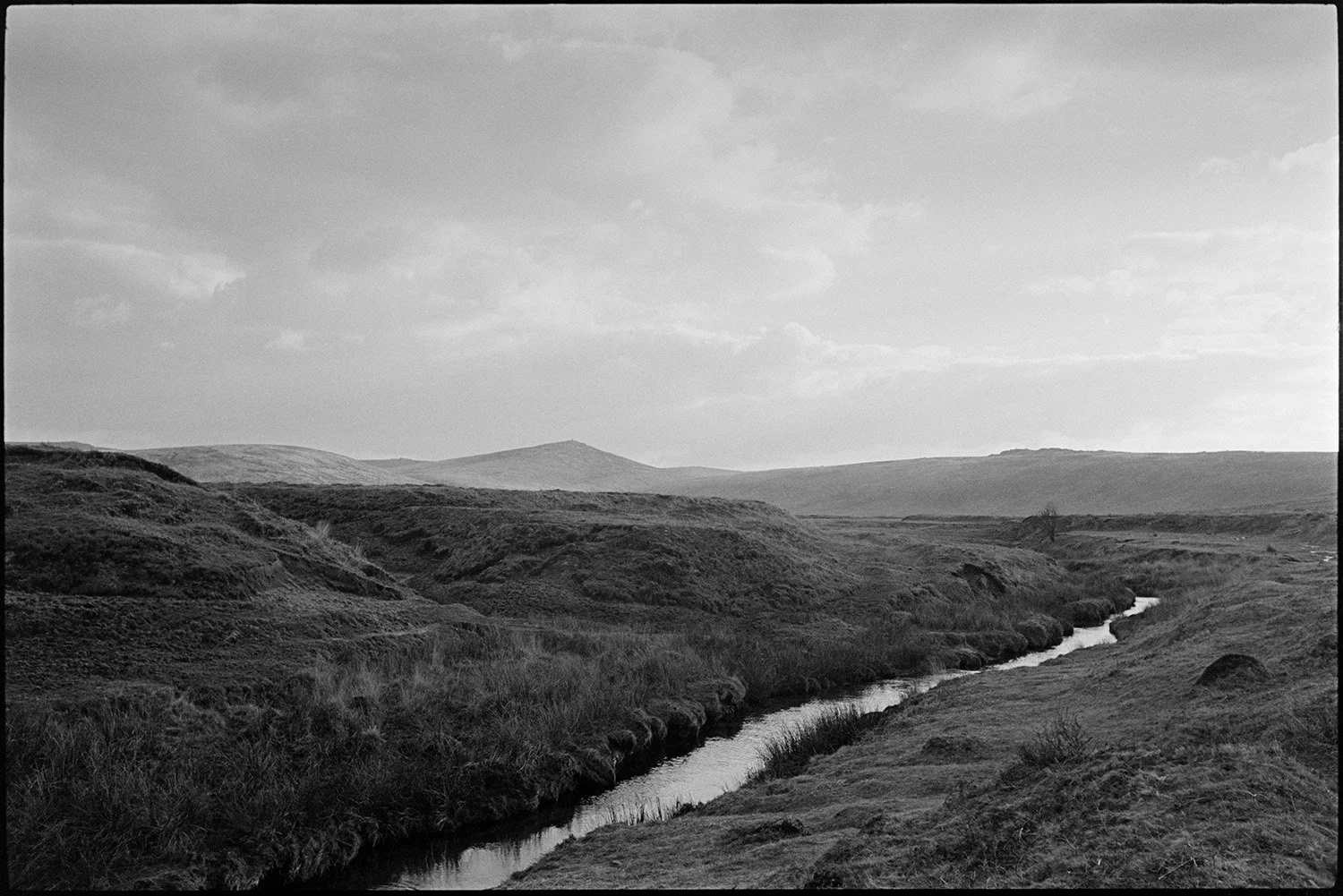
The valley of the River Torridge looking south-west towards Dartmoor. Photograph by James Ravilious © Beaford Arts digitally scanned from a Beaford Archive negative.
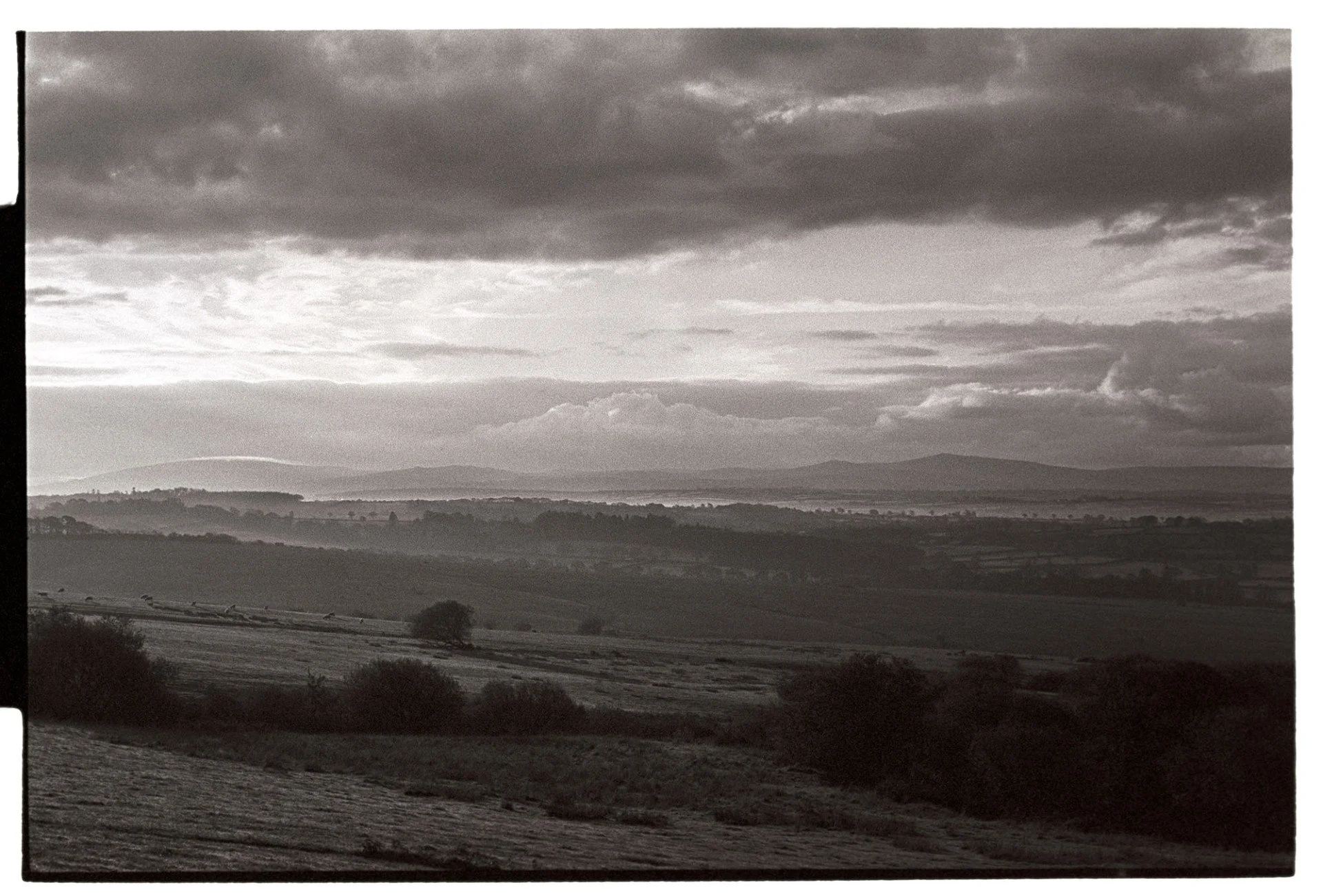
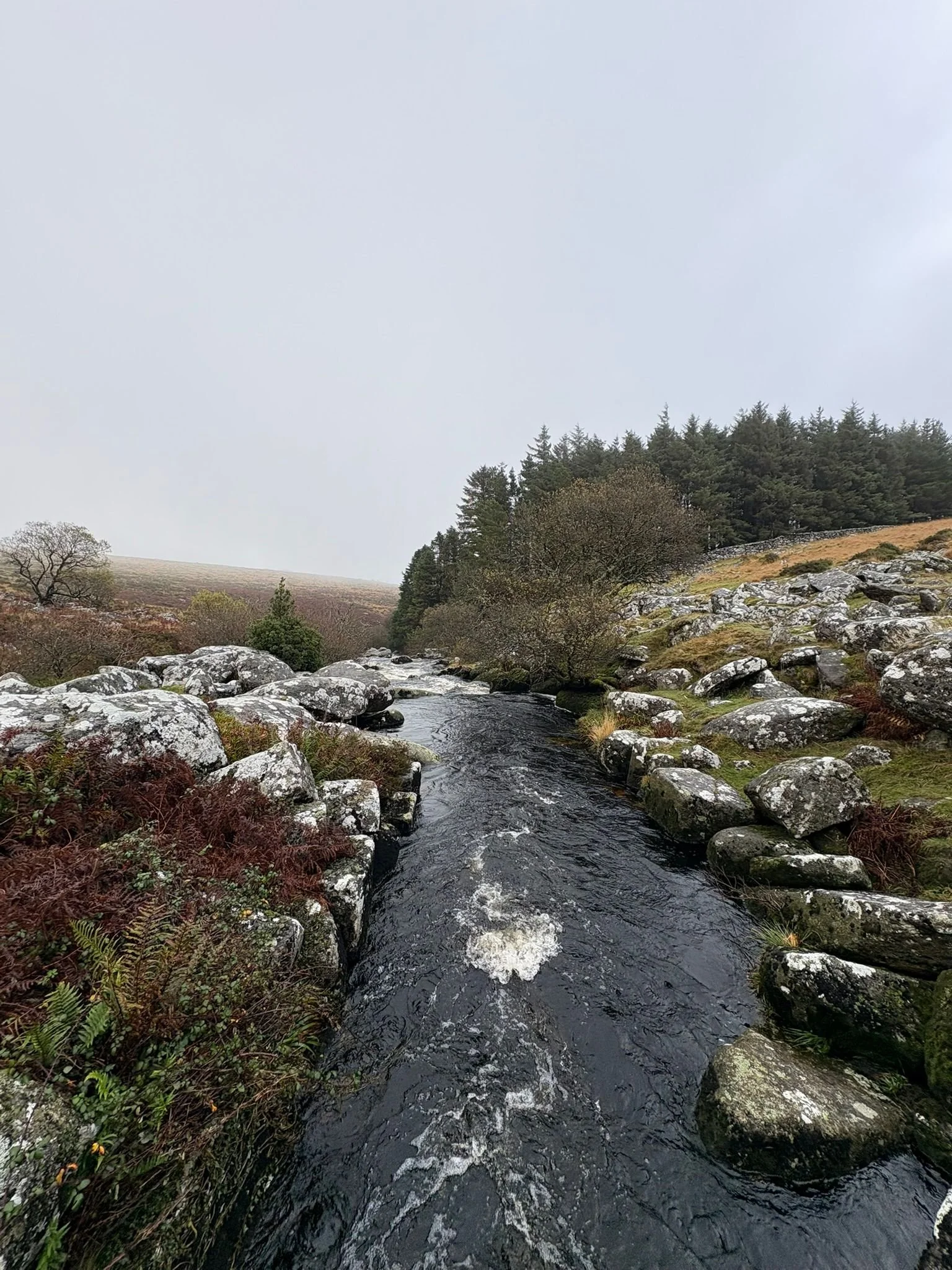
View across moor to Dartmoor. Photograph by James Ravilious © Beaford Arts digitally scanned from a Beaford Archive negative.
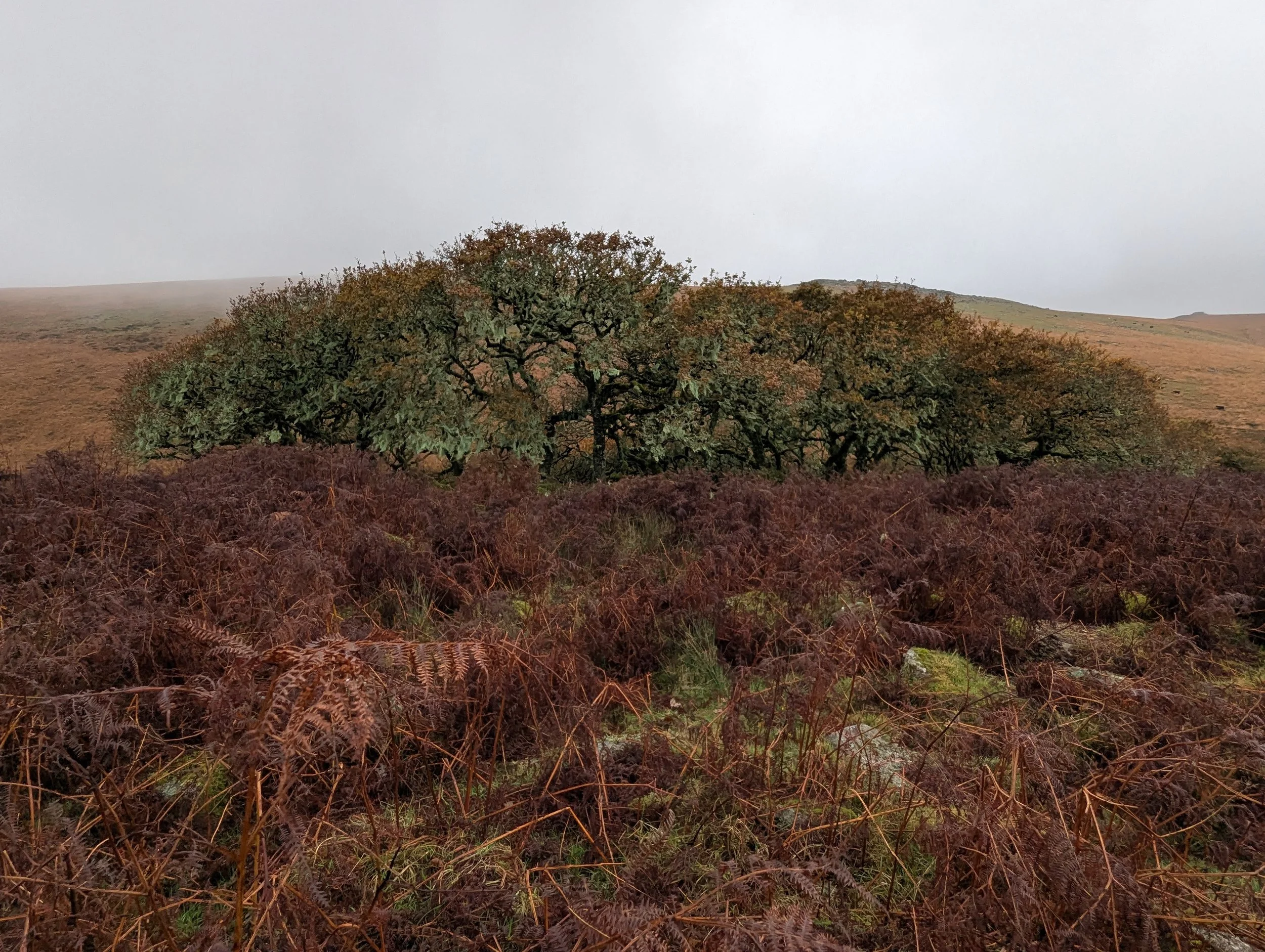
Documentary photograph by James Ravilious for the Beaford Archive © Beaford Arts.