Canto II Literary Map of Exeter & Devon connection: Dean Prior; Robert Herrick
Canto II – A Little Village
“This wall stood long
Goat-grey, red-stained, kingdoms rose and fell,
Surviving storms; high curved arch crumbled.
Now moulders…”
- The Ruin
This earth seldom entertains
the will of its smaller citizens – but
nor does it kill that which insists to fight;
it will bite the bricks and gnaw the mortar
and salivate the timber into slime and shreds
but it will not protest the fresh stone,
hot mortar, new dead shining oak –
do not mistake father time for his scythe
when he carries only illness and it is man
and man alone who murders. Yet this
smattering of stone quarters has seen much
of man and his doings – not, perhaps,
the wars and weddings and whisking
wheels which wrack and ruin the rest
of civilization; but it has tasted love and hate
and stood quietly by, resting in the lids
of dunnocks, to watch mothers tease their
children and fathers strike their sons and
daughters plant seed after desperate seed
into a cracked and dusky soil. So often
did these circles run, so fond were these
dust puppets of their rites and ritual,
that the hares hardly noticed the arrival
of Jonson’s protégé, with his book and his quill
and his sugared dreams of God.
The land was sobered and shaken
by concertos of lyric and ligament
and found its flowers weeping
and its roots chuckling
at the flagrancy of his verse –
a man with eyes to see
the liquid silks and unplucked roses
of youthful glee. When the wigged masses
traded tradition for mouths and blades, this son
of the ancients rebelled and the bluebells wilted
to witness Herrick leave in scorn his chapelled home,
decrying his people’s primitivity. The earth shipped
many a lark to stalk the poet’s progress
and hoisted stanzas back to the grass
on the backs of feathers and fleas – until
the poet, succoured by life, traipsed home to die.
Though the slab atop his chthonic bed
lies lichened and bare, the earth remembers
the songs of Herrick and would forgive
his discontent for the chance to hear
one more melody. Today, the only sound
on that hallowed ground is the passing whine
of black-clogged cars. Distraught
and abandoned, the land cries:
gather ye rosebuds while ye may,
before you are tarred and graved
into the common man’s motorway.
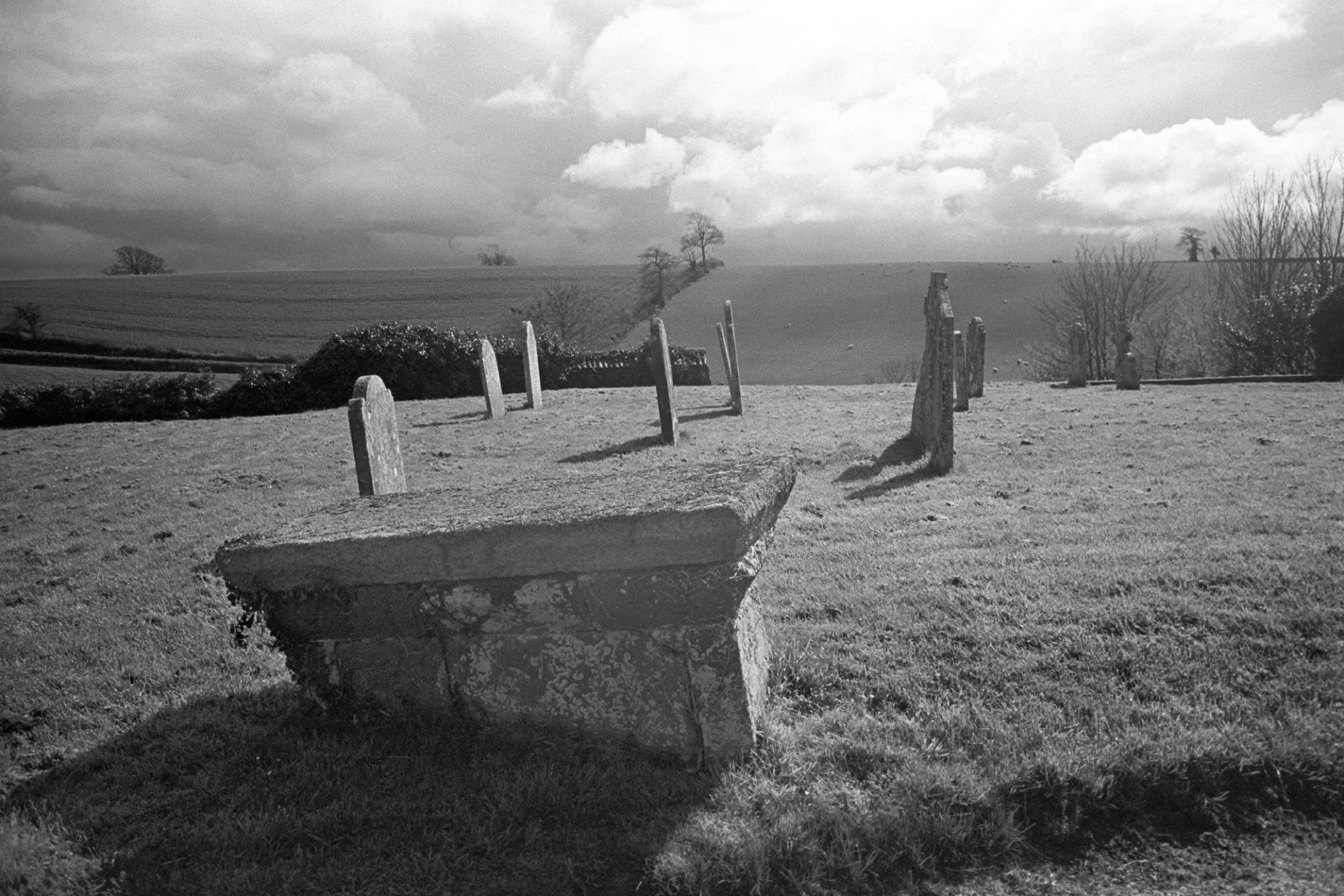
The churchyard. Photograph by James Ravilious © Beaford Arts digitally scanned from a Beaford Archive negative.

Documentary photograph by James Ravilious for the Beaford Archive © Beaford Arts.
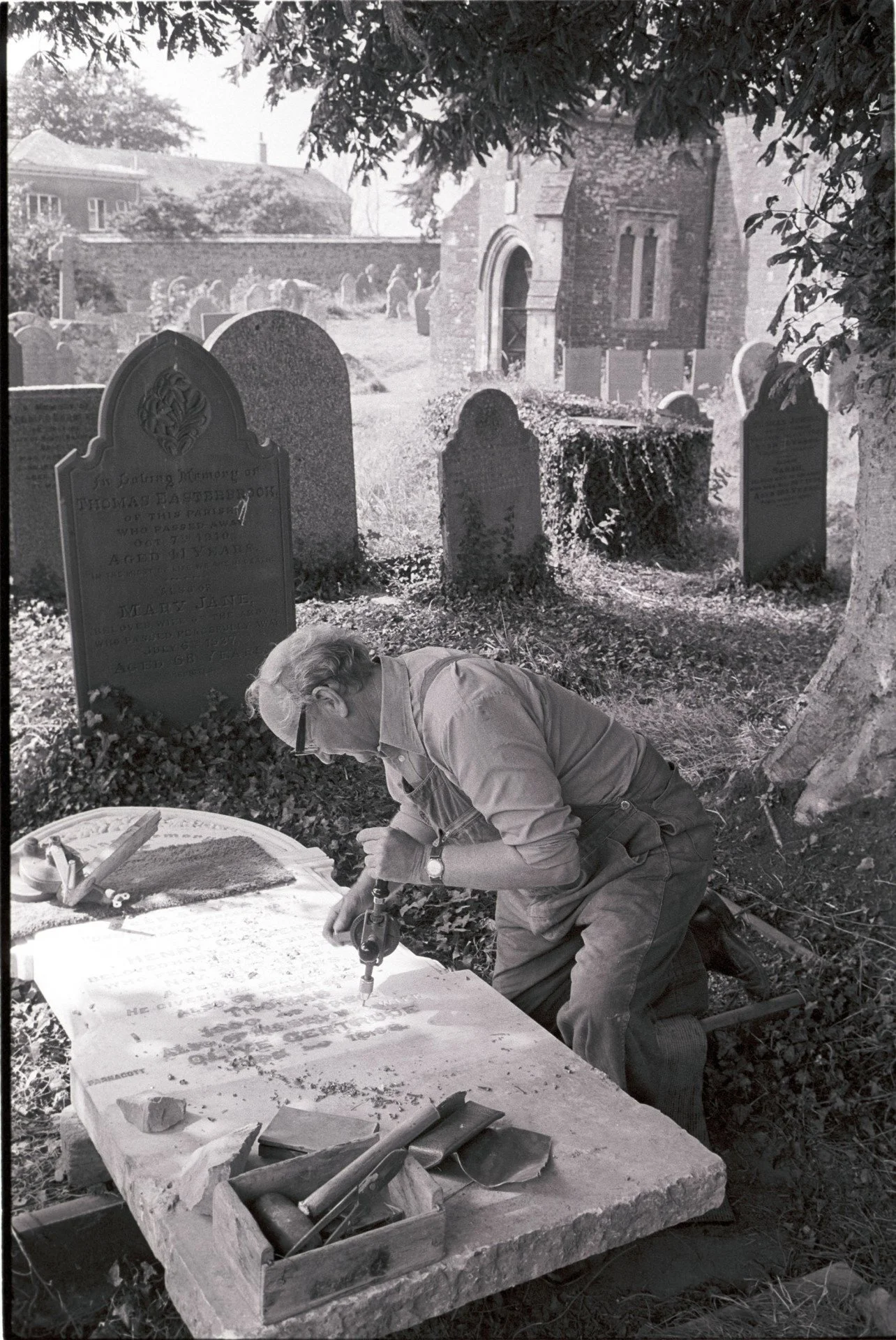
Bruce Edyvean adding to an inscription. Photograph by James Ravilious © Beaford Arts digitally scanned from a Beaford Archive negative.