Canto I Literary Map of Exeter & Devon connection: Exeter; The Exeter Book, Charles Dickens, Sabine Baring Gould, Allen Lane, J. K. Rowling
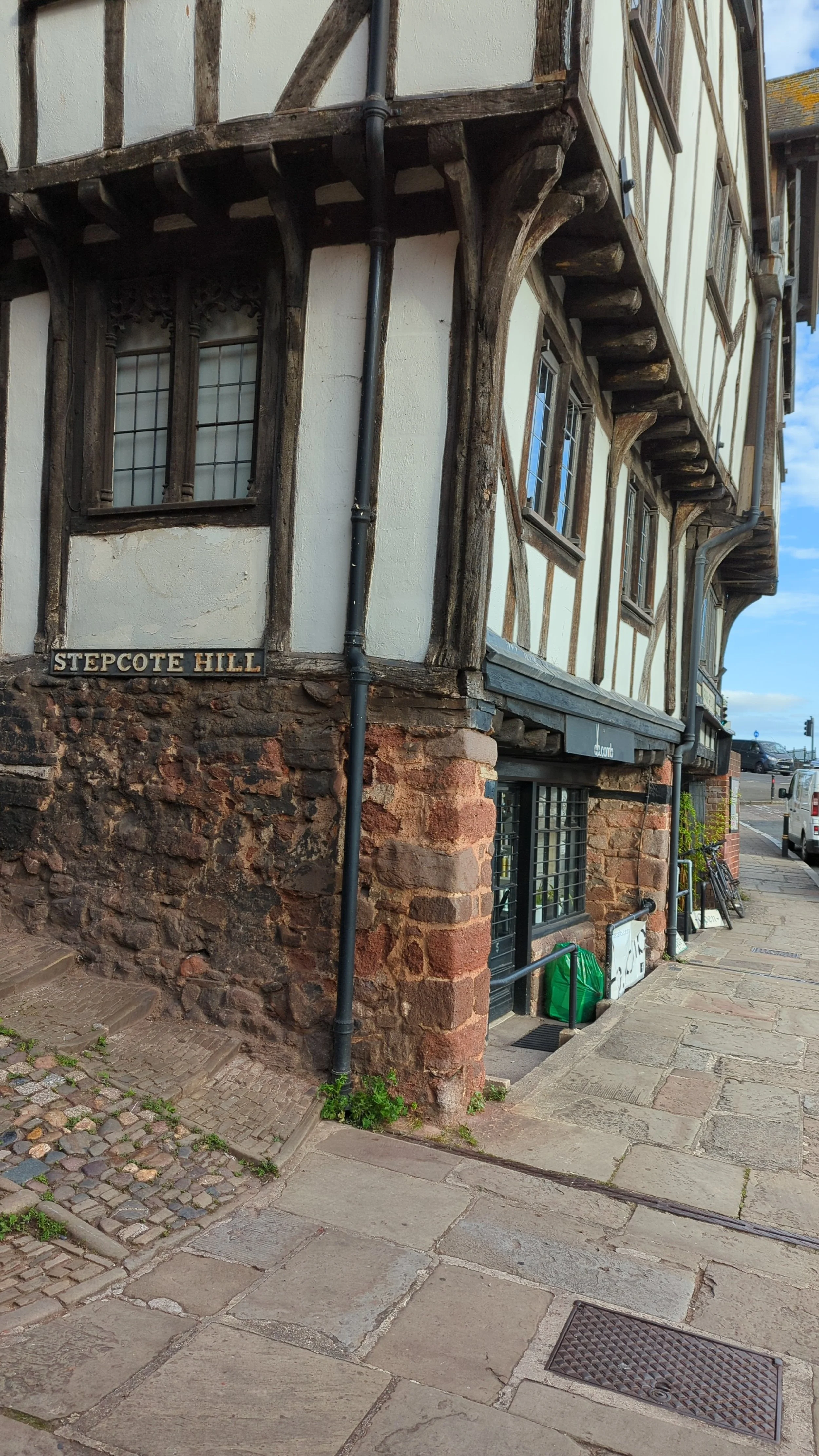
Canto I – The City
“It will be well for those who seek the favour,
the comfort from our father in heaven,
where a battlement bulwarks us all.”
- The Wanderer
Across the knolls and tors they
heeded this primal melody
and came with their young and
daubed ochre glyphs on crumbling
trunks and carved the throats of lambs
and ran the blood into the rivers and
built their forts and dams. The soil
curdled beneath their feet and eddied
stories in their nostrils and from these
first and oldest rites they gummed their piecemeal
god. The hares hastened their circles and watched
with glassy cosmic eyes as the flax and oak
gave way to turrets of limestone and mortar
and men abandoned their lyres for the truths
of bruised parchment.
There is a man – the land sees him
coddled in wax and shadows – with a
shaven pate and a dead graven god
swinging on a chain from his throat
who first recorded the riddles and songs
of exile, love and war. He breathed
in silence; perched on the bank
of a lake of words, watching the vowels
and consonants lap at the corners
of his thumb. The hares in all their clamour
could not fathom the clasped lips of
a tooth-and-tongue creature and leered,
perturbed, as the man dug furrows and buried
his hours in Matins, Lauds and Vespers –
this strangeness only had a voice
in the sibilations of a sharpened quill
and the trees ogled the hands
plucking thin black wasps
to mash in Arabic gum and pour
that sepia sea into his inkwell –
a quiver full of kennings
worthy of Kinnewolf –
stealing those wanderers
from the jaws of eons, singing lays with
a seafarer’s lung. The local groves granted
chiselled boards to harbour those parchment planes
and the cobalt flax surrendered linen
to stab and seal its chains.
Hour after hour, season after season,
the man toiled and trimmed
and measured and thought and smiled
and died. The book passed hand by hand
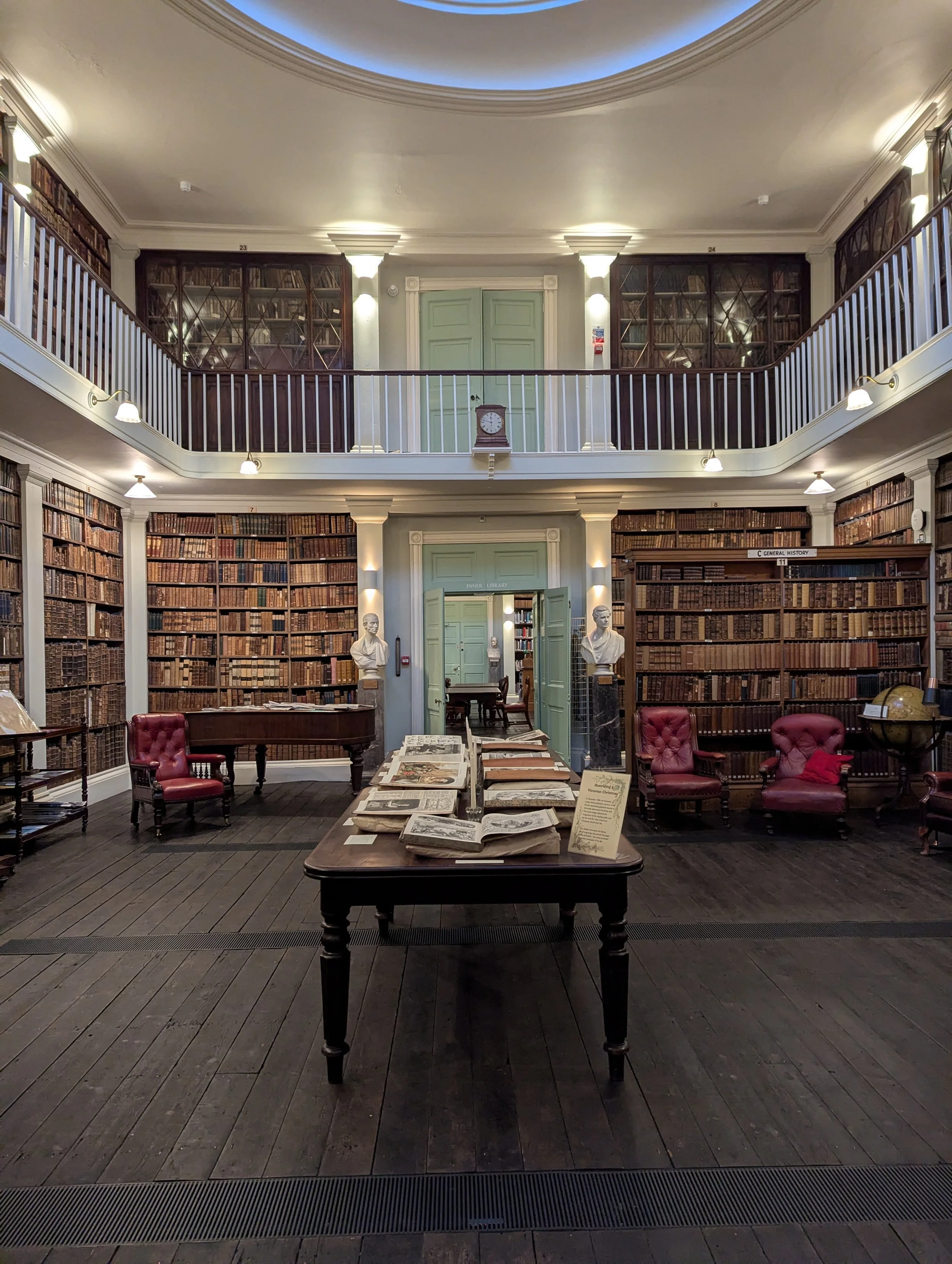
until it nestled in the palm of the cleric
of the Confessor – there it remained –
cloaked and crowded on the Bishop’s shelf,
watching the bastard conqueror crack steel
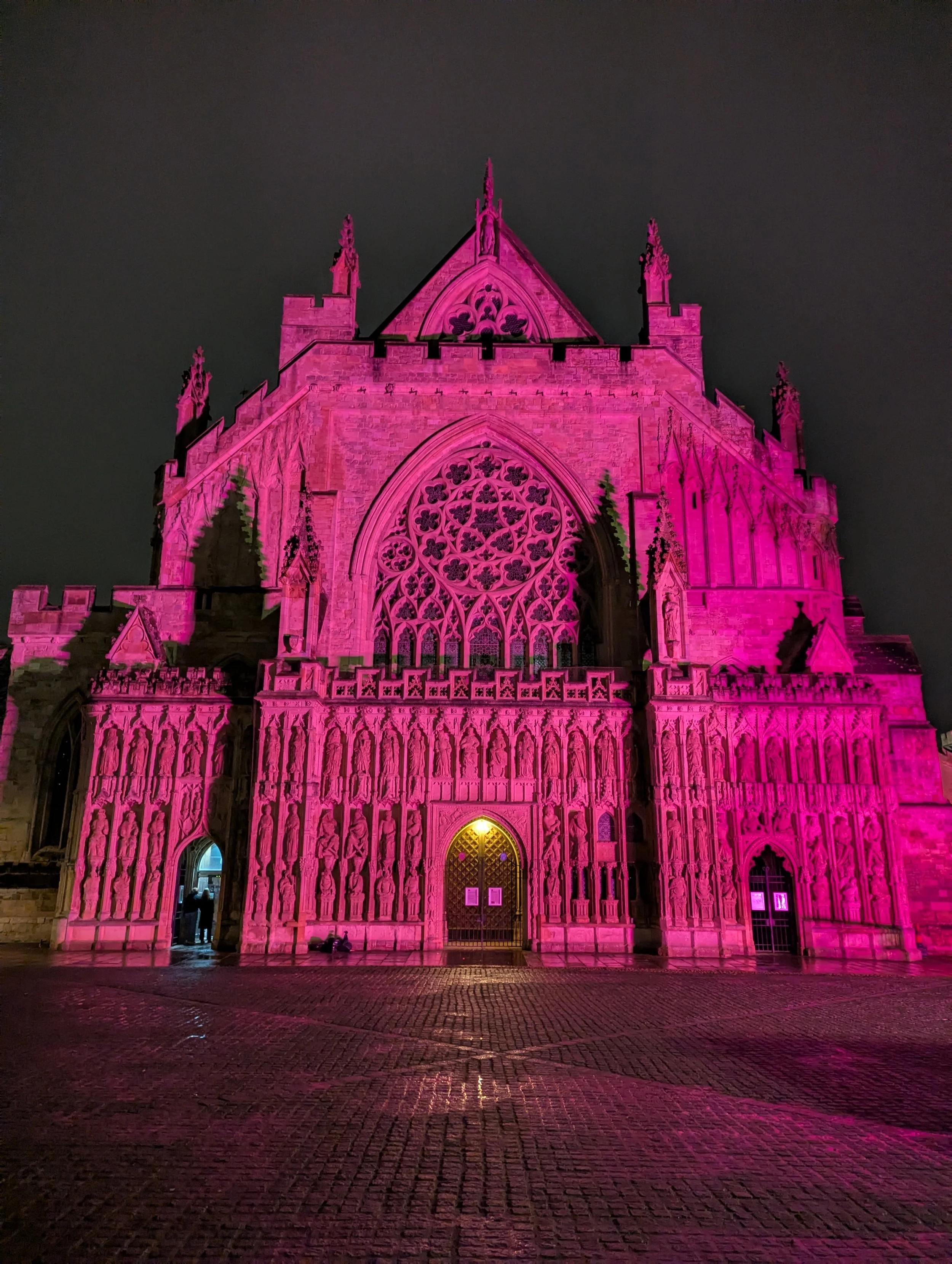
knuckles upon the cathedral door. The angels
and cross-legged Kings split stony eyes
and wept hot mortar to see the book
of the silent man so loudly ignored;
cheap wine began to frill the pages,
a knife was filed against its hide
and the devil’s kiss of a sizzling poker
scorched the hours and days of the monk
into black ragwork scraps. Finally,
in search of a God without a mitre,
they dug in the dust and pig-skin
and proclaimed in fear at the sight
of poetry. Now, Pound and Tolkien can
roll their tongues over riddles and conjugations
and raise red blooms from black soil
and birth a new earth between the syllables
and a glass-eyed child – clutching a brolly
and chewing his bunk – can stir his mouth
to Fairfax’s tree and talk the centuries
with a long-dead monk.
This portion was patient awaiting
the poor man’s laureate,
and the ravens chattered and purred
while Latimer’s ally gazed upon
the mad-rat hustings and noted
the manic exertions and chants
of a baying parliament of paupers.
Dickens had come
to jaunt the cobbles of Dumnonia,
and nestled himself, snug and heady,
within the skull of a Turk, sipping lush
and watching a muse slip into slumber,
his long cigarette slipping and probing
into a blistering antennae.
The writer lodged every glimpse
and murmur and passion and stench
and chronicled those motions
into the lines and ledger of his vision –
locked and bound and serialised
behind a pulp-and-paste door –
the ravens fussed and jeered at the man
who always left and always returned
and always asked of this faithful city
if he please may have some more.
Antiquarian, author, songwriter,
poet, priest, friend and fool;
Gould garnered so many names
that the earth forgot his first
and the hares stamped canyons
and spluttered lakes in their efforts
to affix a title to his shifting soul –
marching over the moor flinging names
like some mad Adam – penning hymns
and jotting myths and dragging vrkolaks
and vlkoslaks from Satan’s locker.
Stoker squashed his eyes
to every bracket and every letter
of Devon’s mythmaker
in a fevered study of the madman
who first knew
the sting of the fang of Nosferatu.
Grass and gorse and jackdaw and flint
trembled and bit the earth, tightening
their grip on a rattling reality and snapping
their necks to watch bundles of steam
bulge from iron lips as carriages racketed
and raced across the melting ladders –
slowing, sauntering, simmering
to a halt by a man – fresh from tea
with the Queen of mystery.
The scutted temperament cannot conceive
the cleft within a mind devoid of tales –
the bolting tide of apathy
from an intellect craving
a single slice
of spined and jotted glory.
They marked the man, collared
and clad in clarity and missed
the moment – that precise pigment
of the psyche when the devil cries
and a brilliant notion yawps into life
like the cosmic engine of a well-oiled
comet; riddling sloth with bullets
and reminding Lane why he got
into the business of paper and ink
to begin with.
The rain giggled in sheets and rivers
and zipped and shuffled down the glass
in queues, scrumming its brothers
and sisters with all the gusto
of a far stronger current – the woman peered
and shivered within that warm harbour
of canned corporate jazz –
slumped in a café, keying accents,
slashing graves and poking trémas –
the waters mingled, ran and curled,
yucking and braying at a sight so tragic:
a student counting verbs
when she should be scrawling magic.
Those rings and cycles tugged
and tore and hindlegs ran and
ran some more – eternally
in flux and flex:
abiding, abiding, abiding,
in that faithful fortress
on the river Exe.
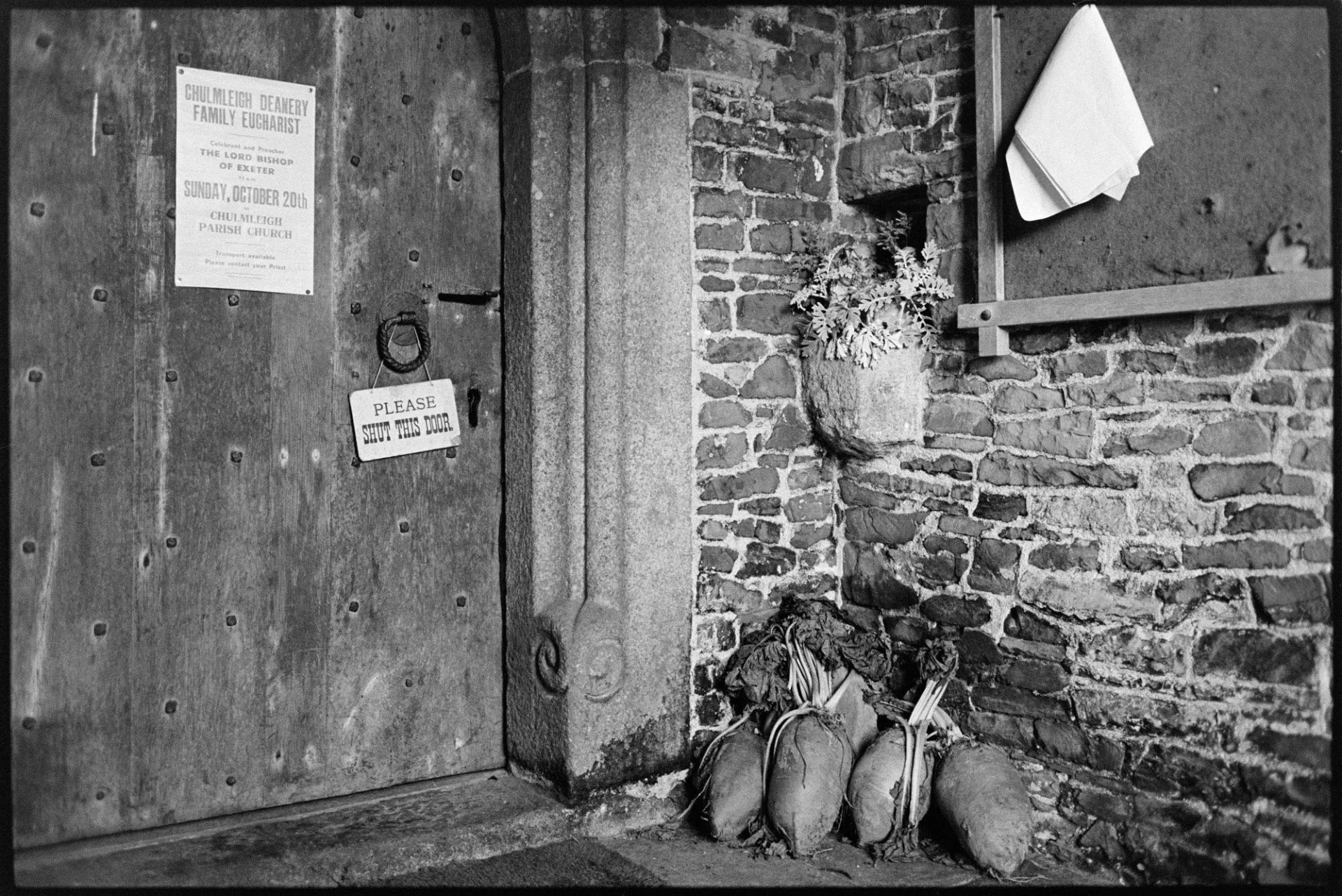
Documentary photograph by James Ravilious for the Beaford Archive © Beaford Arts.
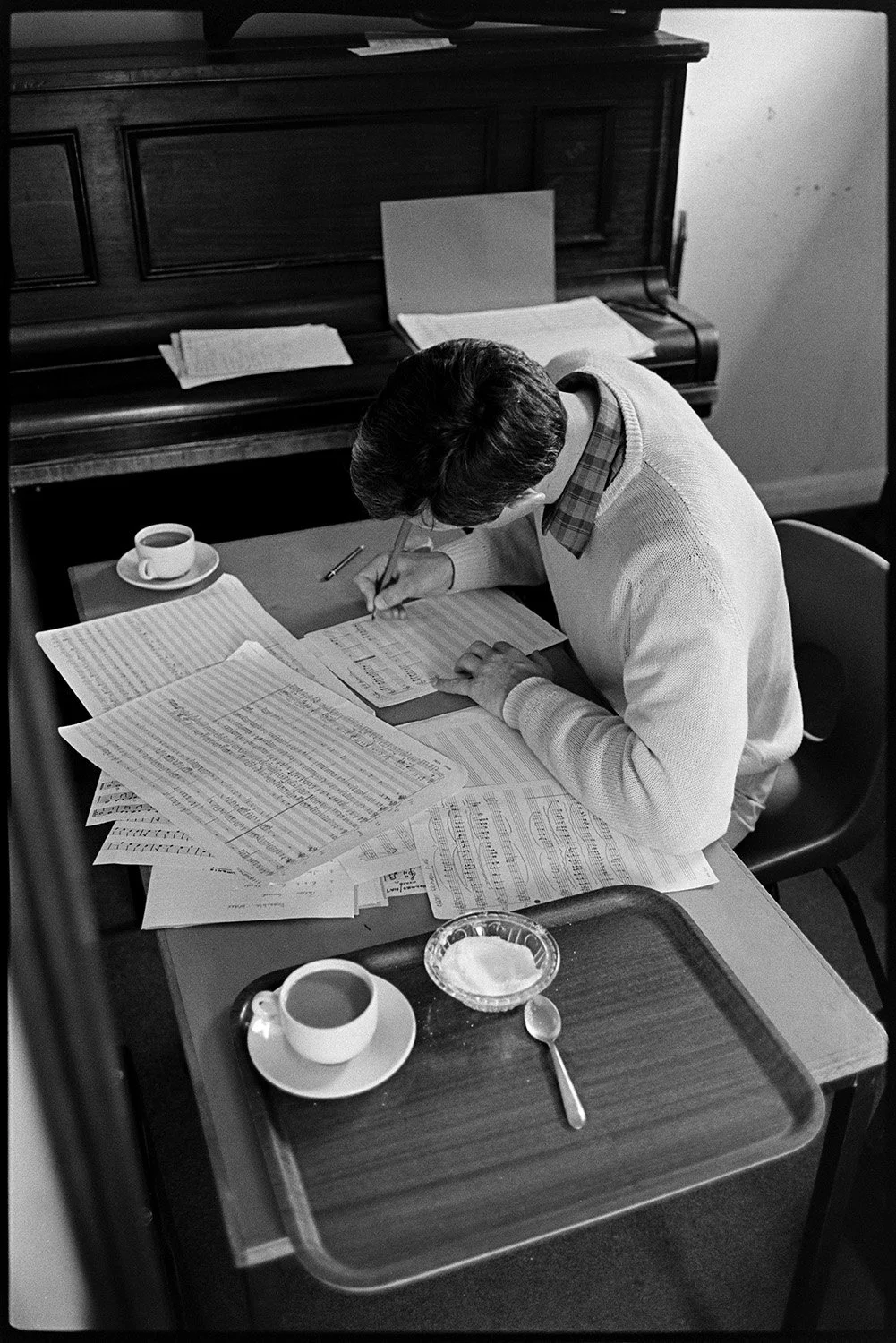
Documentary photograph by James Ravilious for the Beaford Archive © Beaford Arts.
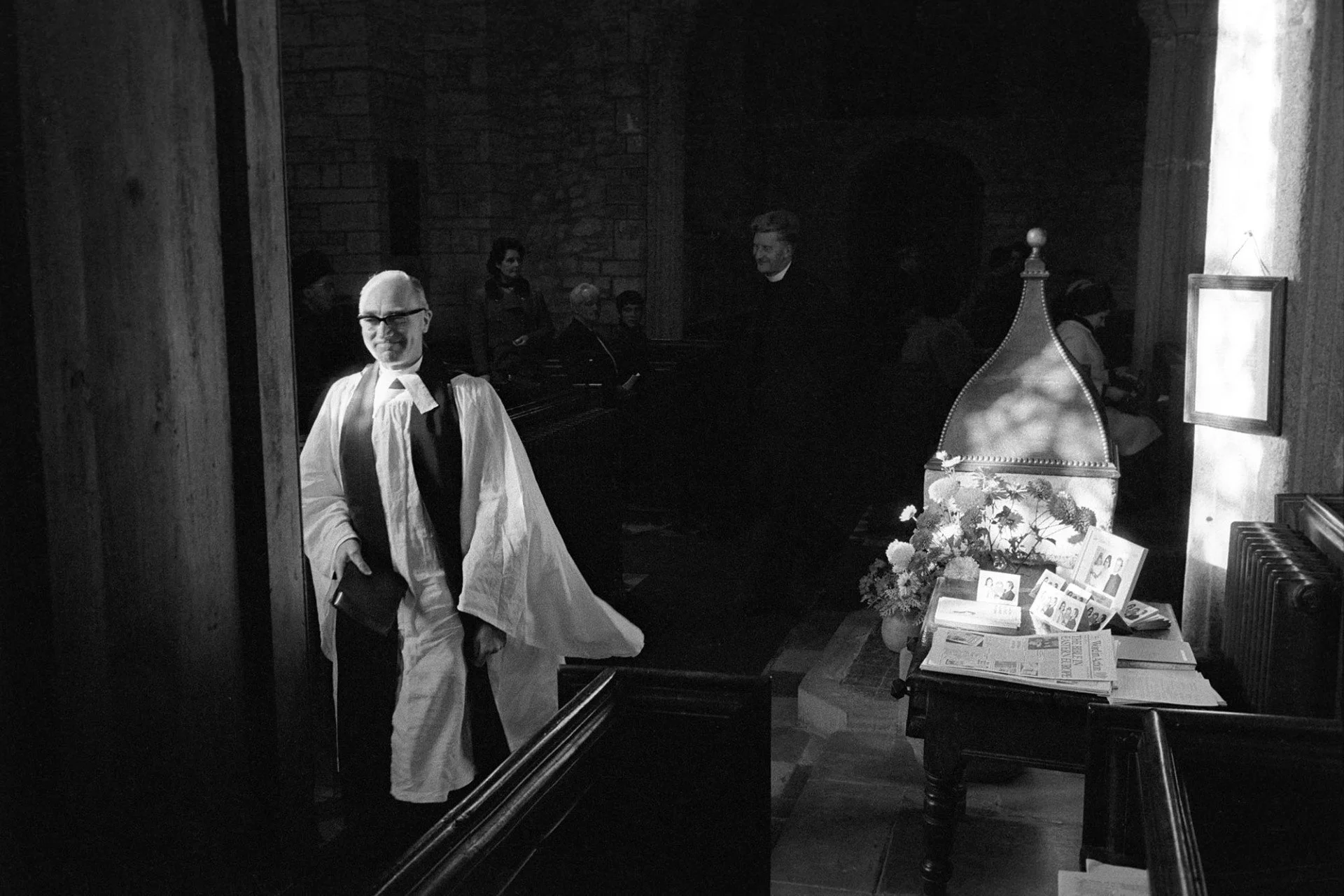
Church service.Photograph by James Ravilious © Beaford Arts digitally scanned from a Beaford Archive negative.

Lunchtime in the public bar. Photograph by James Ravilious © Beaford Arts digitally scanned from a Beaford Archive negative.